





I was listening to the Slate Political Gabfest podcast recently. This was their annual show where they step away from politics (mostly) and discuss whatever fun riddles and conundrums their audience sends in. It’s an annual expansion of their weekly “cocktail chatter” segment where they allow themselves to branch out beyond their usual topics de jour and explore whatever they fancy and find fascinating.
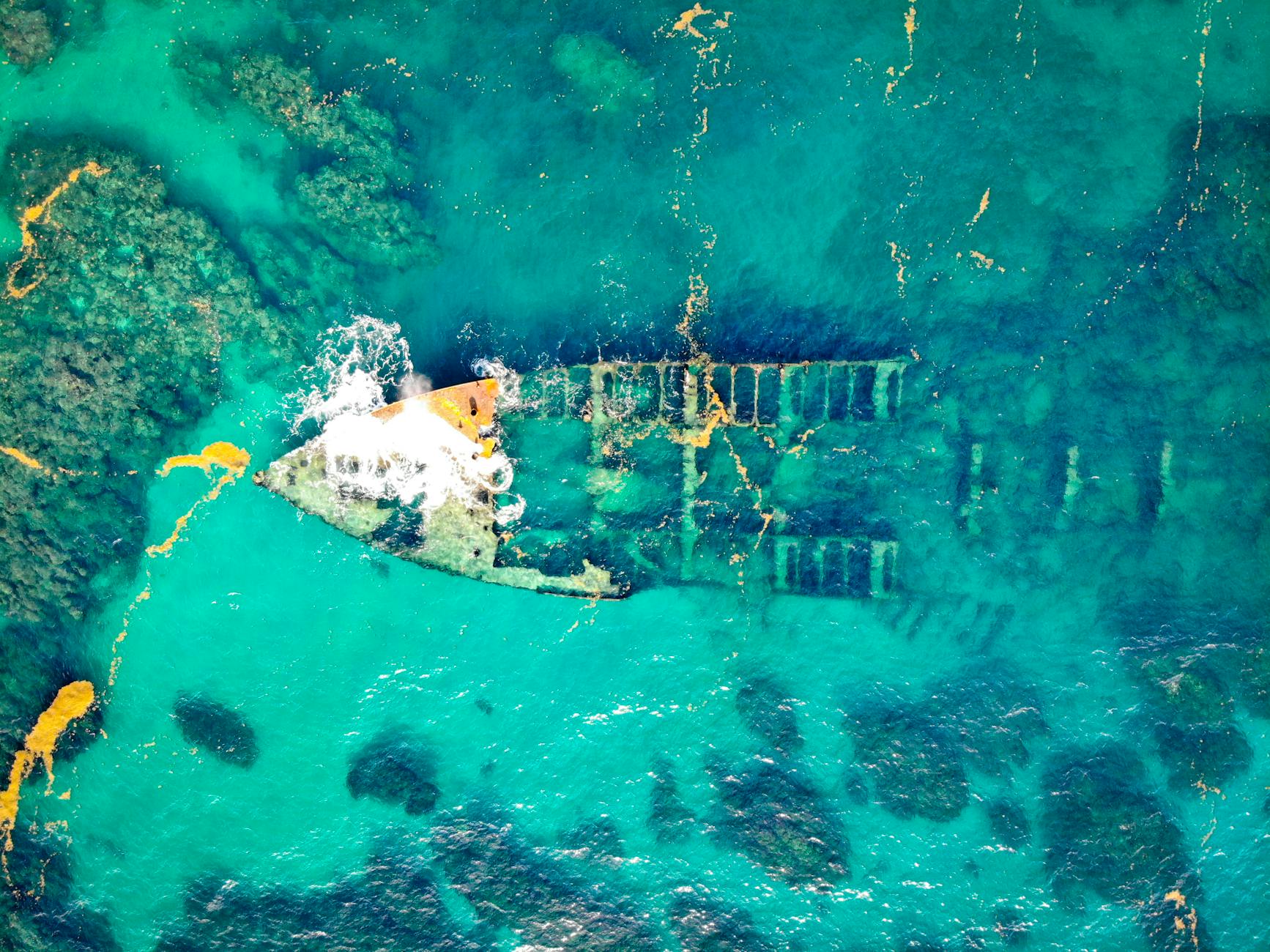
Stephen Colbert was their special guest. (Much to my delight, he and I seem to enjoy the same sorts of podcasts.) He was asked what moment in history could accurately be described as seismic, shifting our understanding of the world to “before” and “after”. He responded by noting that for some scientific measurements, it is necessary to use metals which have never been exposed to nuclear radiation. Ever since nuclear testing began in the 20th century, however, all metals on the earth’s surface have been contaminated by radiation to some degree, requiring scientists to harvest their metals from shipwrecks sunken deep below the surface of the water.
This, he says, is a fitting metaphor for the introduction of artificial intelligence into our understanding of the world around us. Since AI has been widely adopted, it has become impossible to know whether any information a person consumes is the product of human intelligence, or simply the regurgitation of a large language model. This moment, on the precipice of the before and after of human thought is the seismic shift Colbert saw as meaningful.
I’ve been thinking a lot about this idea: the contamination of our thinking by an intelligence not-entirely human, or at the very least not any particular human’s. I read it in student essays, submitted, unscrupulously, in my college composition classes. It’s not merely that students turn in essays that they obviously haven’t written any portion of, but it’s also the evident lack of any human thought anywhere in the process. There is no wrestling with a concept. No spark of originality or imagination. Even the quaint misspellings or misunderstandings about format and content are all gone. All of their “work” has a metallic ring to it, as though it’s been shat out by a robot. AI “writing” is a beige, tasteless goop ladled on the cafeteria tray of intellectualism. It is tautologically present, in that its existence is self-evident, but it offers no flavor or nutrition.
The difficulty of crafting thought is what makes writing meaningful. By fighting your way to a conclusion, you begin to understand the concept yourself.
This is why, despite being an agnostic, I still love this quote from Oswald Chambers, and try to shoehorn it into any class on writing that I teach:
If you cannot express yourself on any subject, struggle until you can. If you do not, someone will be the poorer all the days of his life. Struggle to re-express some truth of God to yourself, and God will use that expression to someone else. Go through the winepress of God where the grapes are crushed. You must struggle to get expression experimentally, then there will come a time when that expression will become the very wine of strengthening to someone else; but if you say lazily — “I am not going to struggle to express this thing for myself, I will borrow what I say,” the expression will not only be of no use to you, but of no use to anyone. Try to re-state to yourself what you feel implicitly to be God’s truth, and you give God a chance to pass it on to someone else through you.
Always make a practice of provoking your own mind to think out what it accepts easily. Our position is not ours until we make it ours by suffering. The author who benefits you most is not the one who tells you something you did not know before, but the one who gives expression to the truth that has been struggling for utterance in you.
It is impossible for AI, which by its very nature is only capable of repeating an amalgamated consensus of thought, to do this sort of spiritual work to uncover deep existential truth. Only humans are able to squeeze through the strata of ideas to find some deeper vein of understanding and drag nuggets of what they’ve learned back to the surface, thereby giving expression to the truth that has dumbly been struggling for utterance in the deep recesses of other human minds.
Books written before the adoption of AI are the last vestiges of truly human thought.
Sellers of books, particularly antiquarian books, are the only remaining credible purveyors of this information. It is our moral obligation to our own and future generations to present the ideas of human intelligence, unsullied by algorithmic interference and the machinations of tech overlords, in all of their beauty, imperfection, and humanity. Books are not simply products to be bought and sold. They are vessels of thought. Containers of grace. They are the gilded frames which circumscribe the ideas of human imagination and ingenuity contained within.
I would love nothing more than to become the best that I can in caring for and purveying these, the most human of objects. I want to write better too.
Subscribe for more human-generated drivel.

About Joshua Rigsby
Joshua Rigsby runs an independent bookstore in a small southern town. His writing has been featured on Thrillist, Atlas Obscura, Southern California Public Radio, the Los Angeles Review of Books, and The Atlantic.